
West Virginia sits at the heart of one of the darkest stretches of sky on the entire East Coast. Low population density, steep mountain ridges that block distant city glow, and vast stretches of protected wilderness combine to give the Mountain State some of the most spectacular night skies you can find within a few hours of Washington, D.C.
If you are planning a weekend escape from the city, a cabin in West Virginia or the Shenandoah Valley puts you right in the middle of it. Our cozy cabin rentals are available throughout the region, from Berkley Springs to Harpers Ferry to Lost River, many with open decks and wide mountain views that make for a perfect stargazing setup.
Start planning your trip today: book yourself a cabin with a view, then read on to learn about the best West Virginia stargazing spots, the best times of year to visit, and everything beginner astronomers need to know before heading out to savor the night sky.
Why West Virginia Stargazing is so Spectacular
What makes West Virginia so special for stargazing is a combination of geography and policy. The state’s rugged Allegheny Highlands rise up to nearly 5,000 feet, naturally lifting you above valley haze and putting distance between you and any urban glow on the horizon.
The region is also home to the National Radio Quiet Zone, a federal area surrounding the Green Bank Observatory in Pocahontas County where radio transmissions and electronic interference are strictly limited. While the Quiet Zone was established for radio astronomy, it has a welcome side effect: minimal light pollution and a culture of preserving the darkness of the night sky.
When stargazers talk about sky darkness, they often reference the Bortle Scale, a nine-point system that measures how much light pollution affects a given location. A Bortle 9 is a heavily light-polluted city sky where only the brightest stars are visible, while Bortle 1 is a pristine, pitch-black site with no artificial light whatsoever.
Most of the West Virginia highlands fall in the Bortle 3 to 4 range: dark enough to see the Milky Way in full detail, spot faint nebulae, and take in thousands of stars that are completely invisible from most suburban backyards.
Best Stargazing Spots in West Virginia and the Shenandoah Valley
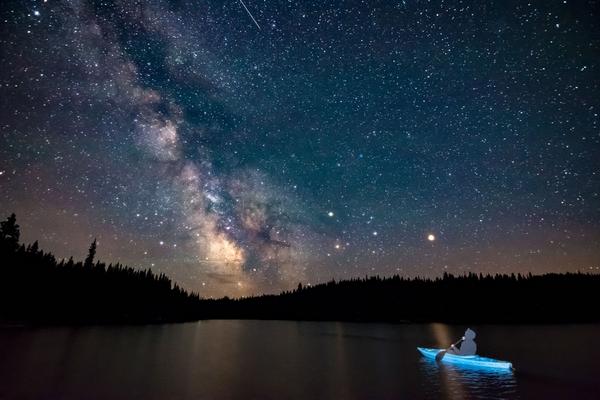
From certified dark sky parks to windswept ridgelines, the region offers a range of options for stargazing in West Virgina.
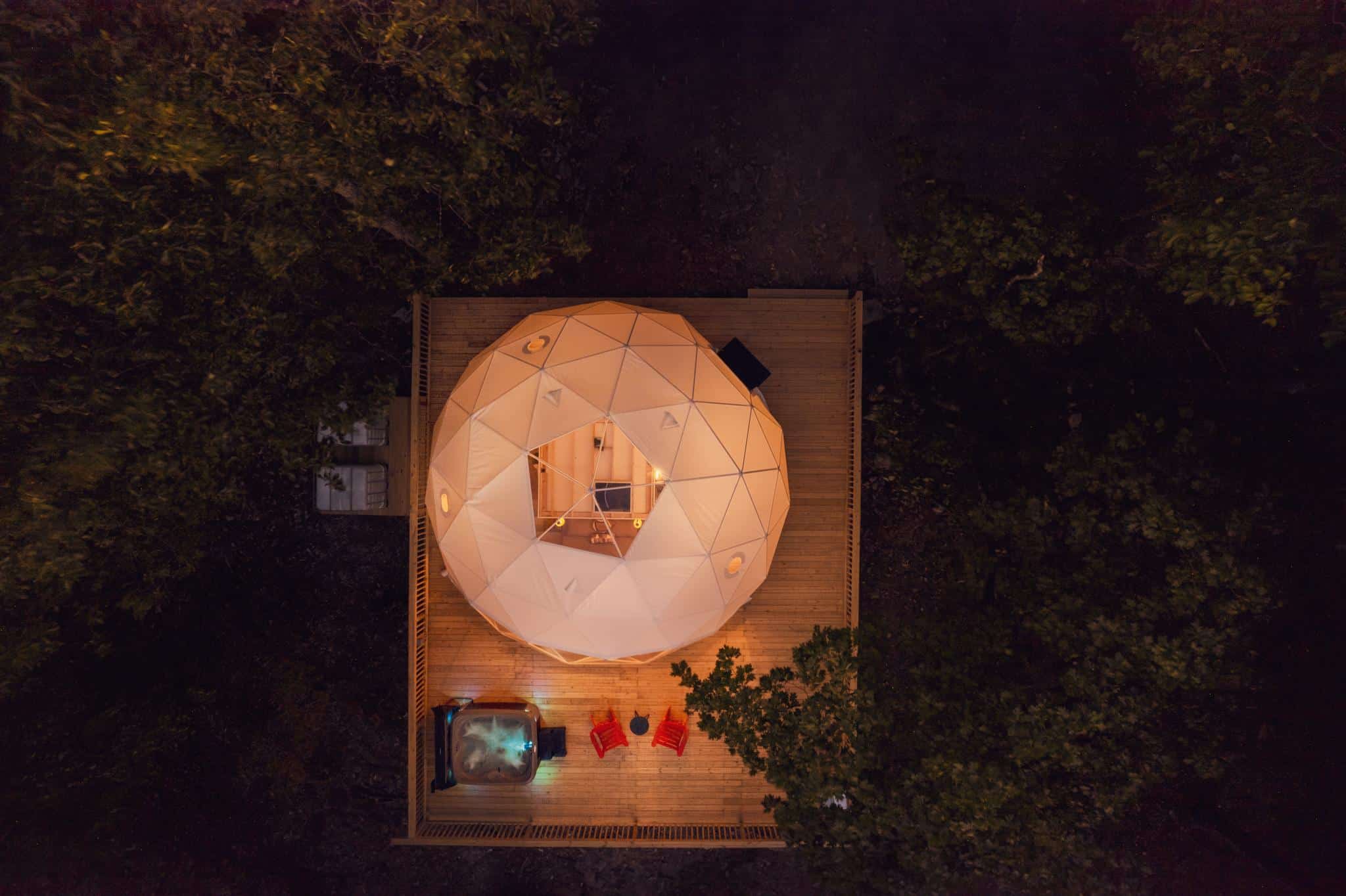
If you really want to take your stargazing experience to the next level, consider booking one of Blue Maple’s glamping domes (pictured above). Several feature clear roofs that let you watch the stars from bed, others have glass fronts that frame sweeping night sky views, and a few even come equipped with telescopes. It is about as close as you can get to sleeping under the stars without actually camping.
For those looking for even more options, these are our favorite stargazing spots.
1. Spruce Knob
- Location: Spruce Knob Observation Tower
- Best for: Wide-open panoramic views, drive-up accessibility
- Bortle Scale: ~3
At 4,863 feet, Spruce Knob is the highest point in West Virginia, and on a clear night it’s an absolute delight. The summit parking area opens onto a nearly 360-degree horizon with no trees blocking the sky in most directions, perfect for watching the Milky Way arc across the night sky.
The viewing experience here is remarkably accessible. You can drive to the lot, step out, and immediately lose yourself among the stars without any need to hike. Bring warm layers even in summer, as temperatures drop quickly after sunset when you’re above 4,000 feet.
2. Dolly Sods
- Location: Dolly Sods Wilderness
- Best for: Remote backcountry experience, no visible light domes
- Bortle Scale: ~2-3
Dolly Sods is a windswept, open plateau unlike anywhere else in the Appalachians. The landscape is more reminiscent of northern Canada than West Virginia, with low shrubs, sprawling bogs, and wide open views in every direction. At night, that openness translates to an unobstructed sky with no competing light on the horizon.
This is a more immersive, backcountry experience than a roadside overlook. The Blackbird Knob Trailhead and the Beaver Dam Trail Trailhead are good starting points to access the plateau.
Come prepared with layers, sturdy footwear, and a star map app downloaded before you say goodbye to cell signal.
3. Seneca Rocks Area
- Location: Seneca Rocks
- Best for: Dramatic foreground scenery for photographers
- Bortle Scale: ~3-4
Seneca Rocks is best known for its towering quartzite fins visible for miles in every direction, but the valley floor and surrounding ridges offer excellent dark skies as well. The dramatic rock formations make for a striking natural foreground when photographing the Milky Way or long-exposure star trails.
The 3-mile up-and-down hike to the rocky ridge is indeed a workout, and most visitors take two to three hours to reach the top. However, the expansive views from the observation deck at the top make any sweat well worth your while.
If you’re not up for scaling switchbacks, the visitor center area also provides open sightlines without the need to climb.
4. Shenandoah Valley and Skyline Drive (Virginia)
- Location: Shenandoah National Park
- Best for: Ridge overlooks with valley views
- Bortle Scale: ~3-4 on ridgelines
Running through the heart of Shenandoah National Park (across the border in Virginia), Skyline Drive follows along the Blue Ridge, and the overlooks along its ridgeline are among the most accessible dark sky viewing spots in Virginia.
It’s well worth the drive from West Virginia. Stops near Thornton Gap and Swift Run Gap put you above the valley haze and away from any significant light sources.
Book yourself a cabin in the Shenandoah Valley, and you’ll be well positioned to head out to these overlooks come evening time. The ridge is especially clear in the fall when the air dries out and humidity drops after summer’s heat fades.
5. Watoga State Park
- Location: Watoga State Park
- Best for: Certified dark sky designation, family-friendly access
- Bortle Scale: ~2
Watoga State Park is the only IDA-certified International Dark Sky Park in West Virginia, earning its designation in 2021.
Situated in Pocahontas County, close to several other well-maintained state parks, Watoga is part of a combined 19,000+ acres of public lands that are purposefully protected from light pollution.
The park is further south in West Virginia than other options, meaning a longer drive if you’re coming on a weekend trip from D.C. However, if you’re a serious astronomer seeking the darkest of nights, Watoga’s thick forests won’t disappoint you.
6. Morgan County Observatory
- Location: 9047 Winchester Grade Road, Berkeley Springs
- Best for: Guided public stargazing, families, first-time astronomers
- Bortle Scale: ~4 (rural dark sky)
The Morgan County Observatory is one of the newest public stargazing destinations in the region, and a natural fit for guests staying in the Berkeley Springs area, or anywhere across our West Virginia cabin rentals. A few nights a month, the observatory is open to the public, where visitors can observe the night sky through quality telescopes with guidance from knowledgeable staff. Expect to view objects like the moon, planets, double stars, and nebulae depending on the season.
Some events are free, while others require you to purchase tickets in advance. Keep an eye on their event calendar to see what aligns with your trip.
Best Time of Year for West Virginia Stargazing
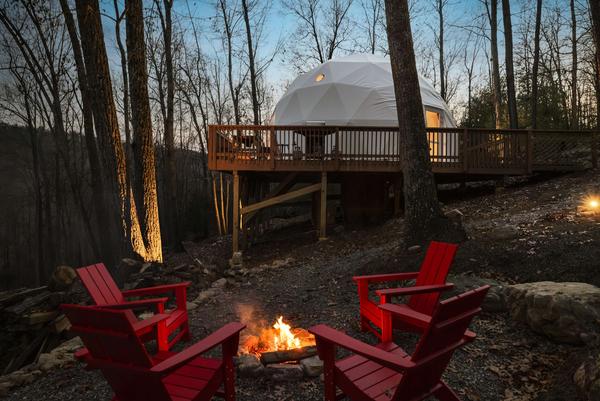
The Mountain State offers good stargazing in every season, but the experience changes significantly depending on when you visit.
Summer (June – August) brings the most dramatic skies of the year. The Milky Way core rises high overhead, making it possible to see the dense band of stars stretching from horizon to horizon on a clear night. Temperatures are mild at higher elevations, though you will still want a light jacket after dark.
Fall (September – November) is widely considered the best overall window for stargazing in West Virginia. Humidity drops sharply after summer, leaving the atmosphere cleaner and the stars noticeably crisper during the fall season.
The Orionids meteor shower peaks in mid-October, and the Leonids follow in November. Fall also sees fewer crowds in West Virginia’s mountains.
Winter (December – February) offers the clearest air of the year. Winter constellations, including Orion, Taurus, and the Pleiades, put on a striking show throughout the colder months. Come prepared for freezing temperatures and check road conditions before heading to higher elevations.
Spring (March – May) is variable but improving. The Lyrids meteor shower peaks in late April. Cloud cover can be inconsistent, but any clear night is worth stepping outside for.
Tips for Beginner Stargazers
You do not need a telescope or any special equipment to have a great night under the West Virginia sky. A few simple habits will dramatically improve your experience.
- Head out on nights around the new moon to catch the darkest skies. Even a half moon produces enough ambient light to wash out fainter stars and the dimmer regions of the Milky Way.
- Give your eyes time to adjust. It takes 20 to 30 minutes for your eyes to fully adapt to the dark. Avoid looking at bright screens during this window.
- Use a red light. Red light preserves your night vision. Many headlamps have a red mode, or you can cover a flashlight with red cellophane.
- Download a star map app before you lose signal. Apps like Stellarium and SkySafari work offline once installed. Load them up while you still have WiFi at your cabin.
- Bring more layers than you think you need. Mountain temperatures drop fast after sunset, even in July. A clear night at elevation can feel 20 degrees cooler than the afternoon.
- Your cabin deck may be all you need. No need to drive for hours every night: many of our cabins with a view are surrounded by trees and open sky with very little nearby light. On a clear night, you can step outside and look up before driving anywhere.
Plan Your West Virginia Stargazing Trip Today
The Mountain State is one of the best places in the U.S. for stargazing. If you’re looking to escape the bright lights of the city, only an hour or two of driving will bring you to some of the darkest skies within reach of the D.C. metro area.
Whether you’re an aspiring astronomer or just want to enjoy a starry night sky, book your West Virginia cabin today. Billions of stars await you, but you have to dive into the mountains to find them.