
Washington, D.C. residents know the feeling: another week of Metro delays, meetings, and concrete. But here’s the advantage of living in the heart of the Mid-Atlantic: mountains, rivers, and charming small towns sit remarkably close by. Within one to two hours of downtown DC, you can trade the city’s pace for winding country roads, misty ridgelines, and the kind of quiet that makes Sunday feel like a real day off.
Think Harpers Ferry’s river confluence, Berkeley Springs’ mineral baths, Luray’s caverns and Skyline Drive access, and the rolling farmland of the Shenandoah Valley. All the destinations mentioned clock in at roughly 60 to 120 minutes from the Capitol under normal traffic conditions, making them realistic Friday-evening-to-Sunday getaways that won’t leave you exhausted before Monday.
Whether you’re chasing fall foliage in October, escaping to a spa in January, or floating a river in July, these weekend trips from DC deliver without requiring a flight or a full week off. Book your stay outside of DC, then read on for more weekend trip inspiration.
1. Harpers Ferry, West Virginia: Historic River Town
Distance from DC: ~ 1 hour
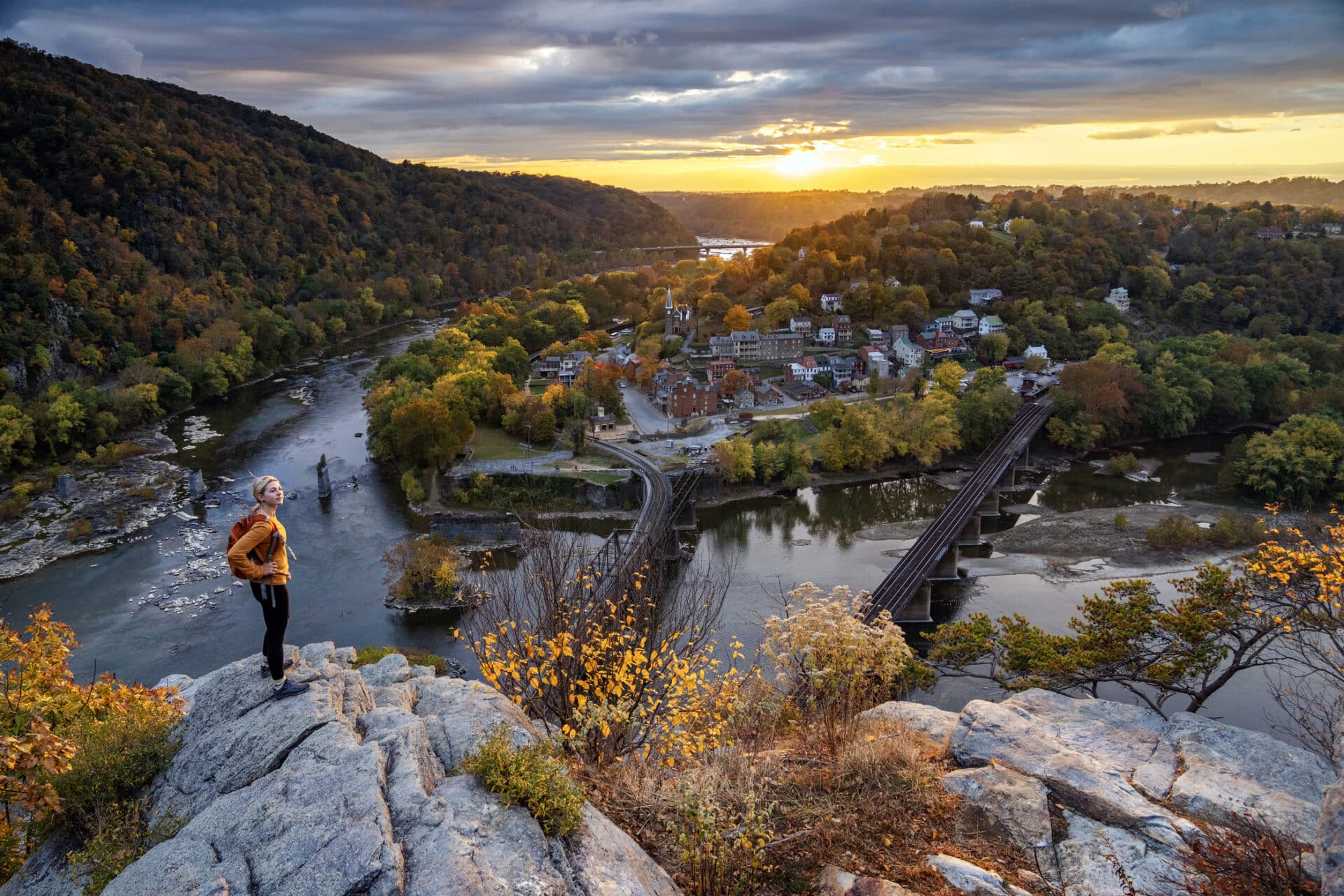
Where the Potomac and Shenandoah Rivers meet beneath forested ridges, Harpers Ferry feels like stepping into another era while staying close enough to DC for a spontaneous Friday escape.
Why Go
This small town draws over 300,000 visitors annually, and for good reason: it delivers both American history and outdoor adventure in a compact, walkable setting that works equally well for history buffs and hikers.
What to Do
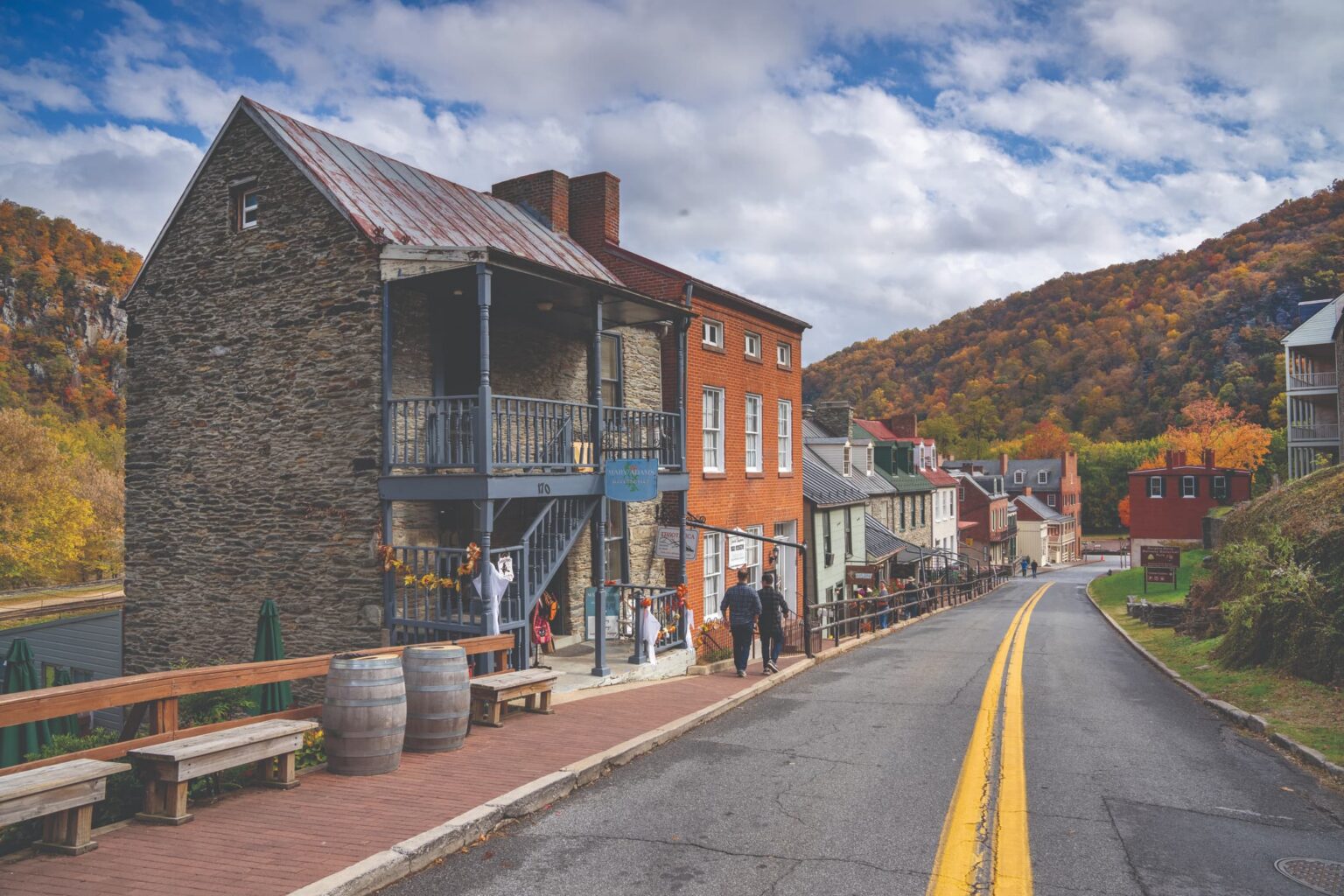
The Lower Town’s 19th-century brick streets and historic buildings transport you to the era when this armory town played a pivotal role in the lead-up to the Civil War. John Brown’s Fort, the fire-engine house that became a fortress during his famous 1859 raid, anchors the Harpers Ferry National Historical Park, while nearby exhibits trace everything from abolitionist movements to the Lewis and Clark expedition’s 1803 departure point.
Walk the stone steps up to Jefferson Rock for the overlook that Thomas Jefferson himself once praised as “worth a voyage across the Atlantic,” and you’ll understand why this spot has drawn visitors for centuries.
But Harpers Ferry isn’t just about looking backward. The Maryland Heights Overlook hike climbs 1,200 feet over 4.5 strenuous miles, rewarding you with 360-degree views of the river confluence that rival any vista on the Appalachian Trail, which happens to pass directly through town.
Prefer something gentler? The C&O Canal towpath follows the Potomac River for miles of flat, scenic walking or biking. From May through September, outfitters shuttle thousands of visitors for tubing and rafting trips on Class I-II rapids down the Shenandoah, turning a history-focused weekend into a water-sport adventure.
When to Go
Seasonal timing matters here. Mid-to-late October brings peak fall foliage when roughly 80 percent of annual visitors arrive to see the ridges blaze with reds and golds. April and May offer spring wildflowers like trillium blooming along the trail without the crowds.
Winter weekends mean lighter traffic and the chance to snowshoe the trails, though some businesses operate on reduced hours after Thanksgiving. For food and drink, cross the river to Harpers Ferry Brewing near Purcellville for IPAs with ridge views and Friday night live music, or grab trail-ready coffee and snacks at Battle Grounds Bakery in Lower Town.
Where to Stay
The beauty of Harpers Ferry is that it packs this much variety into a destination just 67 miles from downtown DC, only about an hour’s drive when you avoid Friday rush hour. Book a stay in a nearby cabin, and you’ve got the perfect basecamp for a weekend that balances the Potomac River, American history, and mountain air without the long haul.
2. Winchester, Virginia: Apple Orchards in the Northern Shenandoah Valley
Distance from DC: ~ 1.5 hours
About 75 miles west of the Capitol via I-66, Winchester anchors the northern Shenandoah Valley as Virginia’s self-proclaimed apple capital.
Why Go
This historic town, settled in 1732 by German and Scotch-Irish immigrants, manages to feel both refined and relaxed, with a walkable Old Town full of historic homes that invite evening strolls after a day exploring the surrounding orchards and ridgelines.
What to Do
The heart of Winchester is the Old Town, a one-mile brick-paved stretch lined with more than 70 shops, galleries, and restaurants housed in 18th-century buildings. You could spend an entire Saturday afternoon here, ducking into local art galleries, browsing antique finds, or settling into a café with a good book.
For history buffs, the Museum of the Shenandoah Valley offers a 19-acre campus with a 35-room mansion, sculpture gardens, and a 2,500-piece decorative arts collection spanning three centuries. Civil War enthusiasts shouldn’t miss Stonewall Jackson’s Headquarters Museum, housed in the building where General Jackson based his operations in 1862.
What sets Winchester apart from other Shenandoah Valley towns is its dual identity as both a walkable urban center and a gateway to serious outdoor pursuits. Drive 30 minutes south, and you’re at trailheads in George Washington National Forest; Signal Knob offers a 2.7-mile loop with ridge views.
Continue another few minutes to the Front Royal entrance of Skyline Drive, milepost zero of the 105-mile scenic route that winds along the Blue Ridge Mountains crest with 75 overlooks. This positioning makes Winchester an ideal base for outdoor enthusiasts who also want great food and comfortable lodgings after a day on the trails.
When to Go
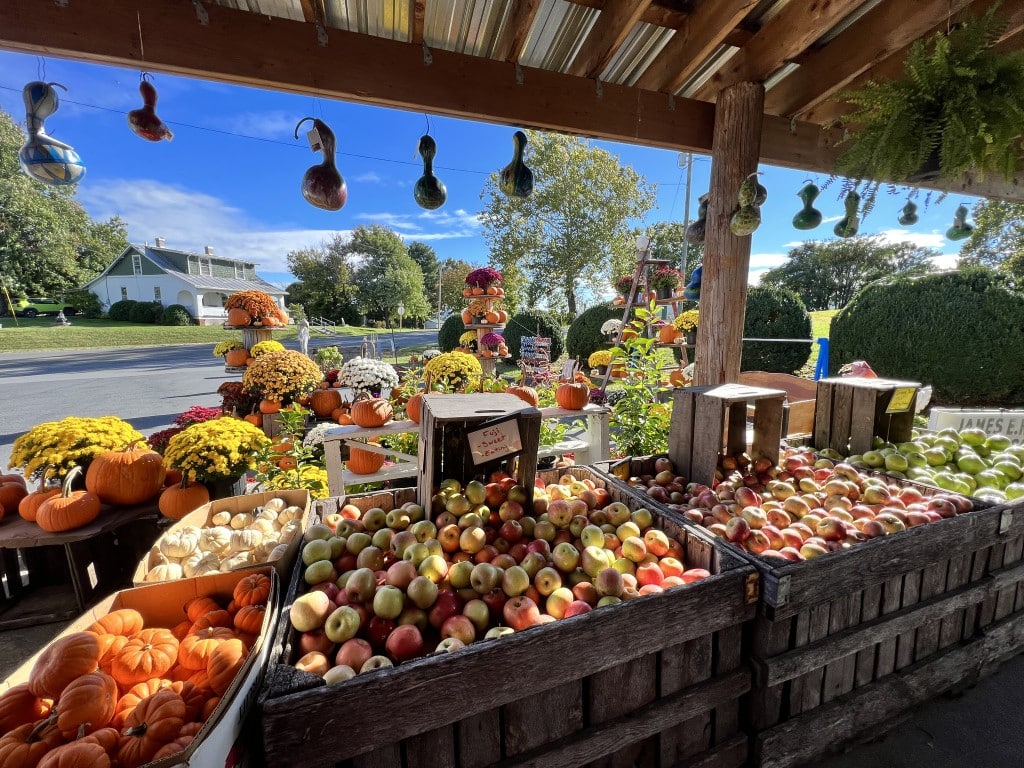
If you’re looking for a bit of seasonality, the Shenandoah Apple Blossom Festival transforms the town each late April through early May, drawing 250,000 visitors over ten days for parades, fireworks, and queen coronations amid blooming dogwoods. Fall brings its own magic: September and October mean harvest season at farms like Marker-Miller Orchards, where you can pick from 20 apple varieties, ride hayrides through the orchards, and devour still-warm cider donuts.
Where to Stay
Winchester stays quieter than the more famous southern valley spots like Luray, which means shorter lines and a more relaxed pace. Book a cabin in Winchester as your base, and you’ve got the best of both worlds: cobblestone strolls by night, orchard-rimmed trails by day.
3. Berkeley Springs, West Virginia: A Relaxed Spa Town
Distance from DC: ~ 2 hours
A quiet, no-agenda kind of place, Berkeley Springs is where you go to slow down, soak in natural mineral baths, and actually unplug for a weekend.
Why Go
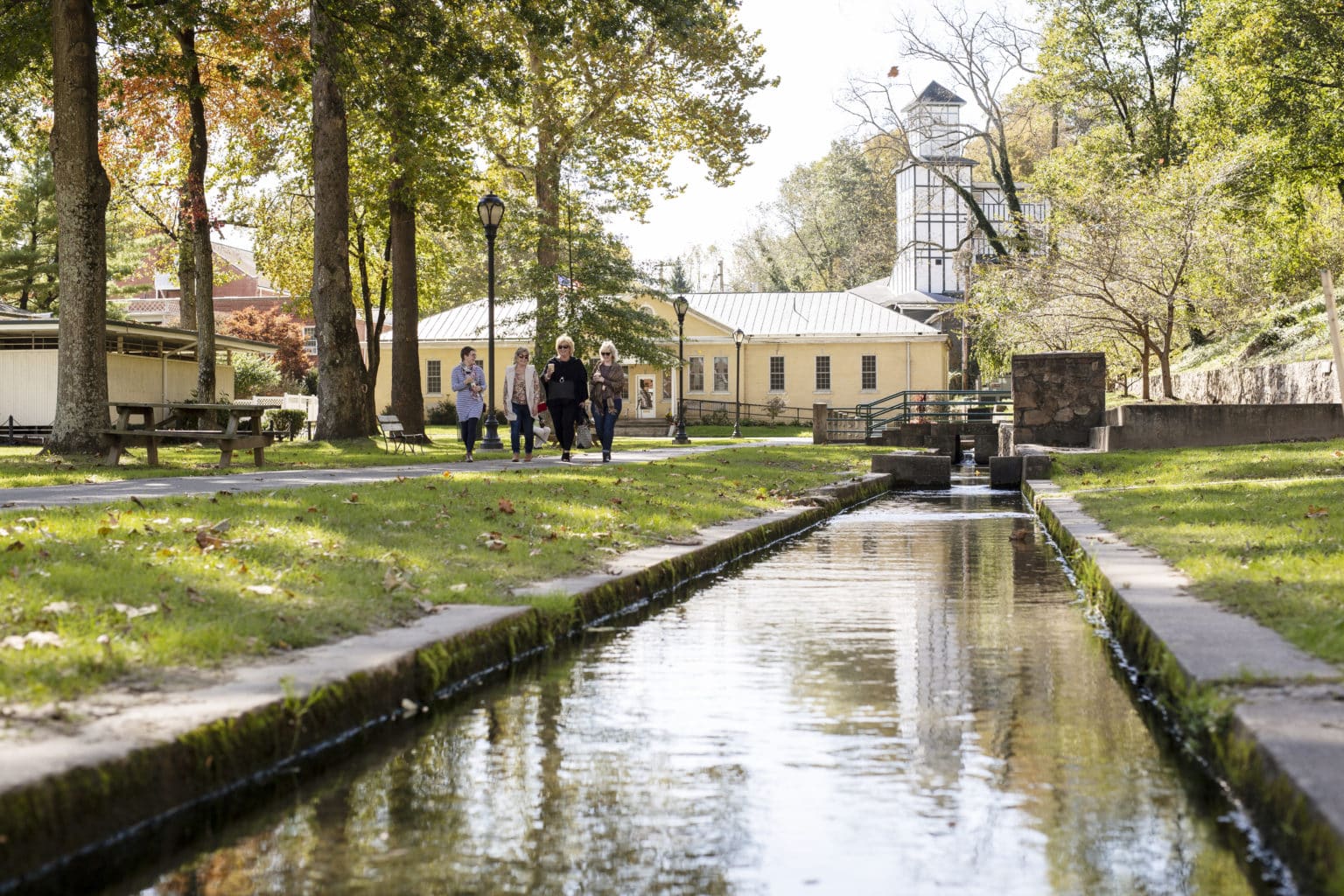
Two hours northwest via US-48, Berkeley Springs delivers something increasingly rare: permission to do almost nothing. This tiny West Virginia town (population 800) has drawn visitors seeking relaxation since 1730, when George Washington himself bathed in its warm mineral springs. Today, the same sulfur-free, 74-degree waters flow year-round through Berkeley Springs State Park’s eight public bathhouses, offering hour-long soaks for around $25; a fraction of what you’d pay at a fancy resort spa.
What to Do
The town’s compact historic district feels designed for slow walking. More than 20 galleries showcase local and regional artists, the 1780s Museum of the Berkeley Springs traces the spa’s evolution through free exhibits, and cafés like Panorama Cafe invite lingering over coffee.
But perhaps Berkeley Springs’ greatest attraction is its lack of urgency. This isn’t a weekend trip for checking boxes; it’s a trip for reading on the cabin deck, stargazing under Bortle Class 4 skies clear enough to reveal the Milky Way, and letting the mineral water work out whatever knots the DC commute left behind.
Ten minutes east of Berkeley Springs, Cacapon Resort State Park spreads across 6,500 acres with 20 miles of trails, an 18-hole golf course, and Cacapon Lake for swimming, fishing, and boating from May through September.
When to Go
The 3-mile Tuscarora Trail overlook hike rewards with panoramic ridge views, especially stunning when April and May wildflowers carpet the forest floor. Winter transforms Berkeley Springs into a cozy retreat: 20-30°F days outside make the warm springs and indoor spa treatments feel even more indulgent.
Where to Stay
Many rentals here feature hot tubs, wraparound porches, and wooded seclusion: exactly what a wellness-focused weekend calls for. If you’re ready to trade the city’s noise for mineral-soaked calm, book a stay in Berkeley Springs and let the water do the work.
4. Luray, Virginia: Caverns & Shenandoah National Park Gateway
Distance from DC: ~ 2 hours
Luray sits on the western flank of Shenandoah National Park, about 100 miles from DC via I-66 and US-211. When traffic cooperates, you’re looking at roughly two hours of driving, and then you’re at one of the East Coast’s most rewarding gateways for both underground wonders and Blue Ridge Mountain trails.
Why Go
Luray is your easiest gateway to Shenandoah—pairing one of the East Coast’s most impressive cavern systems with quick access to Skyline Drive, big-view hikes, and a low-key mountain town basecamp.
What to Do
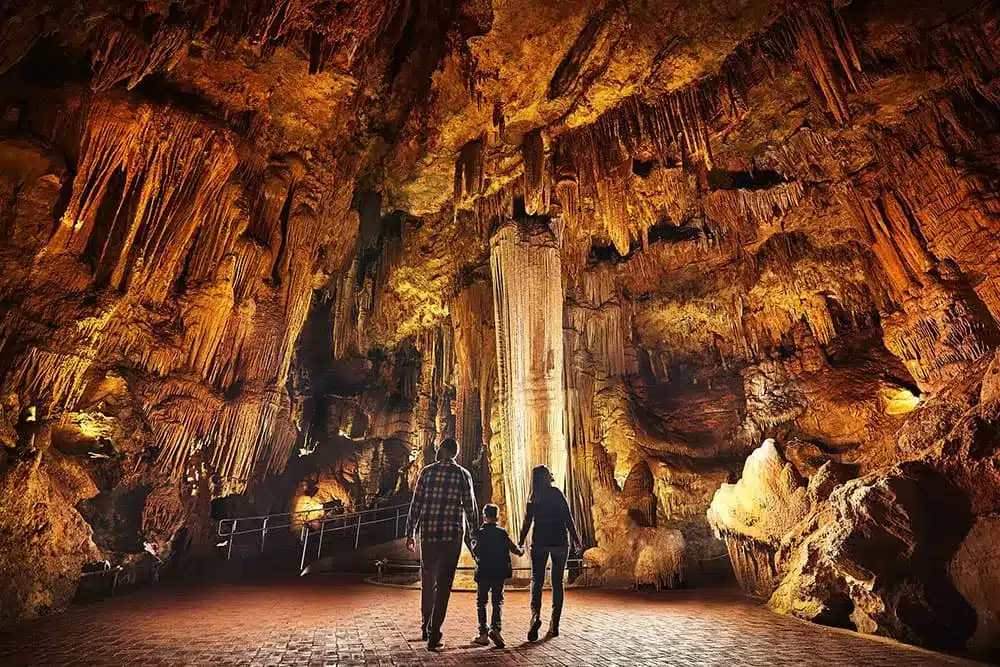
The headline attraction is Luray Caverns, the largest caverns in the eastern United States at 64 acres with chambers reaching ten stories deep. The one-mile underground loop passes formations that took millions of years to create, including the Great Stalacpipe Organ, an instrument that uses 140 stalactites as tuned percussion and has been playing since 1957, and a mirror-smooth subterranean lake that reflects the cave’s cathedral ceilings.
The caverns make Luray a must-visit for families, with lighting and kid-oriented audio tours that keep younger visitors engaged.
But Luray’s real draw for outdoor enthusiasts is its proximity to Shenandoah National Park. The Skyline Drive entry at milepost 31.5 puts you 30-45 minutes from some of the park’s best summit hikes:
- Stony Man: A 1.6-mile easy climb to 4,011 feet with 360-degree views
- Hawksbill: The park’s highest point at 4,051 feet rewards a 2.9-mile roundtrip with unobstructed panoramas
- Mary’s Rock: Delivers similar views to Hawksbill on a moderate 2.9-mile route
Downtown Luray keeps things simple: Broad Porch Roastery for morning espresso and pastries, Hawksbill Brewing for local IPAs and sours in a converted historic bank, Gathering Grounds for farm-sourced lunches. Couples might pair sunset overlooks on Skyline Drive with nearby wineries like Muse Vineyards, just 10 minutes from town. Families can balance cavern exploration with easy nature trails and downtown ice cream stops.
When to Go
Timing your visit matters. Mid-October brings peak fall foliage along Skyline Drive… and over 500,000 visitors to the park during that window. Expect crowds; arrive early. Summer paddling season peaks when water temperatures hit 80 degrees, perfect for tubing or kayaking. April and early November offer shoulder-season solitude when trails stay quiet, and you might have an overlook to yourself.
Where to Stay
Use a nearby Shenandoah Valley cabin as your base for two or three days of national park immersion. With a hot tub waiting after trail miles and beautiful scenery in every direction, you’ll understand why this stretch of the valley draws visitors year after year.
5. Basye & Mount Jackson, Virginia: Year-Round Outdoor Fun
Distance from DC: ~ 2 hours
Less crowded than the usual Shenandoah hotspots, Basye and Mount Jackson offer a quieter mountain basecamp with four-season access to skiing, trails, and wide-open valley views.
Why Go
While most DC weekenders funnel toward Front Royal or Luray, the central Shenandoah Valley around Basye and Mount Jackson offers something different: space.
About 110 miles from downtown via I-66 and I-81, this stretch of rolling farmland and mountain ridges delivers the valley’s scenery without the gateway-town crowds. It’s the kind of place where you might not pass another car on the backroads between your cabin and the trailhead.
What to Do
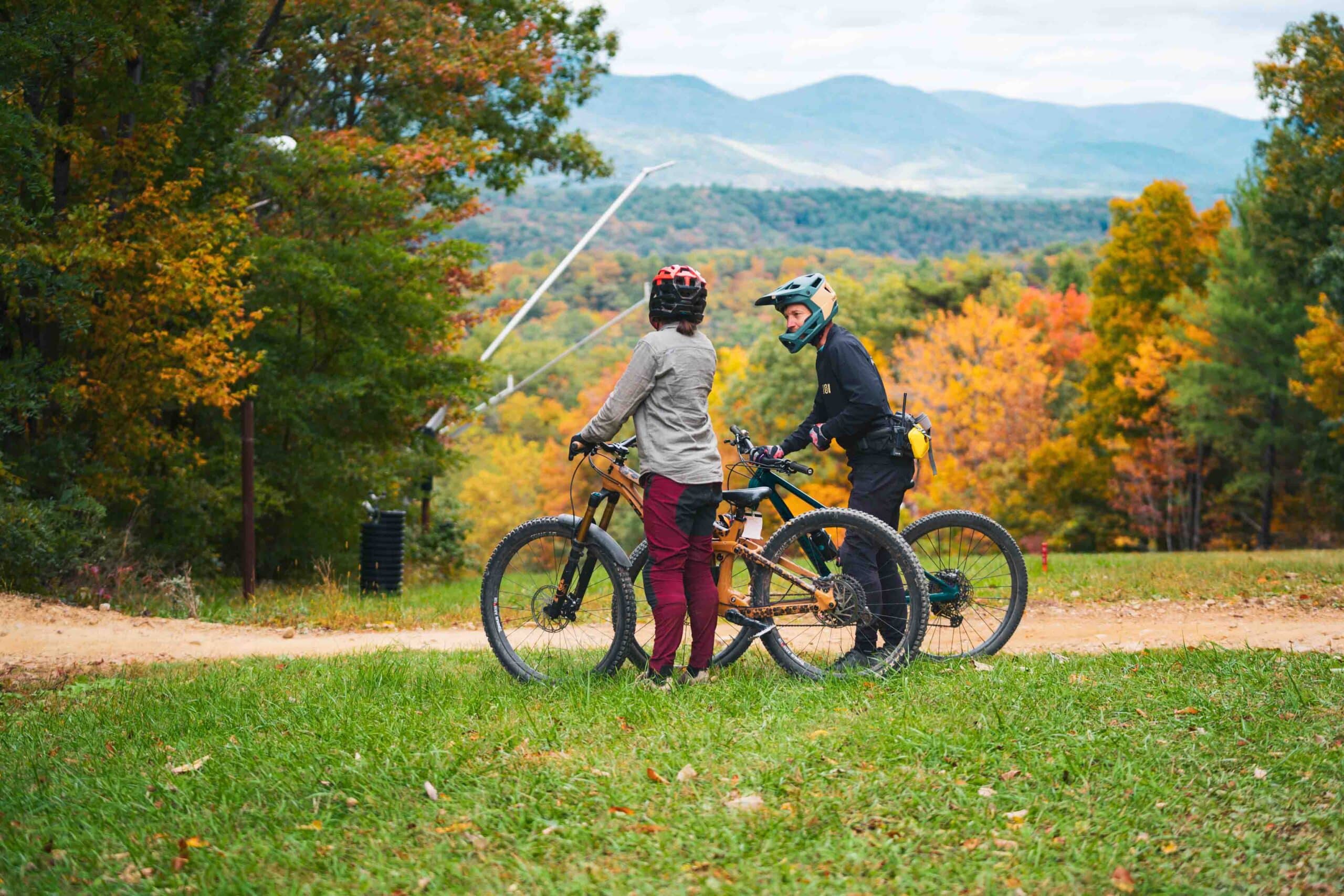
Bryce Resort anchors the Basye area as a year-round destination. Winter brings 1,350 vertical feet of skiable terrain across 400 acres, drawing 50,000 visitors annually for skiing, snowboarding, and tubing.
When the snow melts, the same slopes convert to mountain biking and hiking trails, while Lake Laura opens for kayaking, paddleboarding, and swimming. Add disc golf, scenic chairlift rides, and summer concerts, and you’ve got a mountain resort that rarely feels overwhelming.
Nature enthusiasts will find less-trafficked trails along the Virginia-West Virginia border. Wolf Gap Recreation Area offers eight miles of hiking, including the 4.2-mile Big Levels Loop through mixed hardwood forest.
For views without the climb, drive 30 minutes to Woodstock Tower, where a short walk delivers a 1,000-foot overlook of the Shenandoah River’s famous Seven Bends: a sight that rivals anything on Skyline Drive. Wine lovers can spend an afternoon on the Route 11 vineyard trail, with Wolf Gap Vineyard just 15 minutes from Basye.
Think of Basye and Mount Jackson as a mountain basecamp option: less famous than the park gateways, which means more solitude and shorter lines for everything from ski lifts to restaurant tables.
When to Go
There’s never a bad time to visit Bryce Resort. All year-round visitors can enjoy a variety of outdoor activities.
Winter offers skiing, snowboarding, and tubing at Bryce Resort, while spring through fall opens up hiking, mountain biking, and time on Lake Laura. Fall is especially stunning, offering peak foliage without the heavier crowds you’ll find in Shenandoah National Park. Summer tends to be the quietest season, making it ideal for a slower, low-key cabin stay with easy access to outdoor activities.
Where to Stay
Many Bayse rentals are stand-alone cabins or chalets with decks overlooking forest or fairway, fireplaces for evening warmth, and the kind of quiet that makes a two-night stay feel like a real reset.
6. Lost River, West Virginia: Off-the-Grid State Park Close to DC
Distance from DC: ~ 2 hours
Two hours from downtown DC via I-66 and WV-259 backroads, Lost River feels like it should be much farther away.
Why Go
This corner of Hampshire County, West Virginia, cultivates a deliberate remoteness that’s become its greatest draw. Cell service drops in and out.
Lost River suits a specific kind of traveler: DC couples or small friend groups who want to unplug, cook dinners in a well-stocked cabin kitchen, read by the fire, and go rock climbing or hiking without rushing to the next attraction. The limited connectivity isn’t a bug; it’s a feature. When your phone can’t ping you about work emails, you’re finally off duty.
The night sky darkens to Bortle Class 2 levels, meaning you’ll see the Milky Way arched overhead without any effort. It’s the kind of hidden gem where the main evening activity is sitting on the deck and listening to nothing.
What to Do
Lost River State Park has no shortage of outdoor activities; it covers 4,400 acres and features 36 miles of trails, ranging from gentle forest walks to ridgeline scrambles.
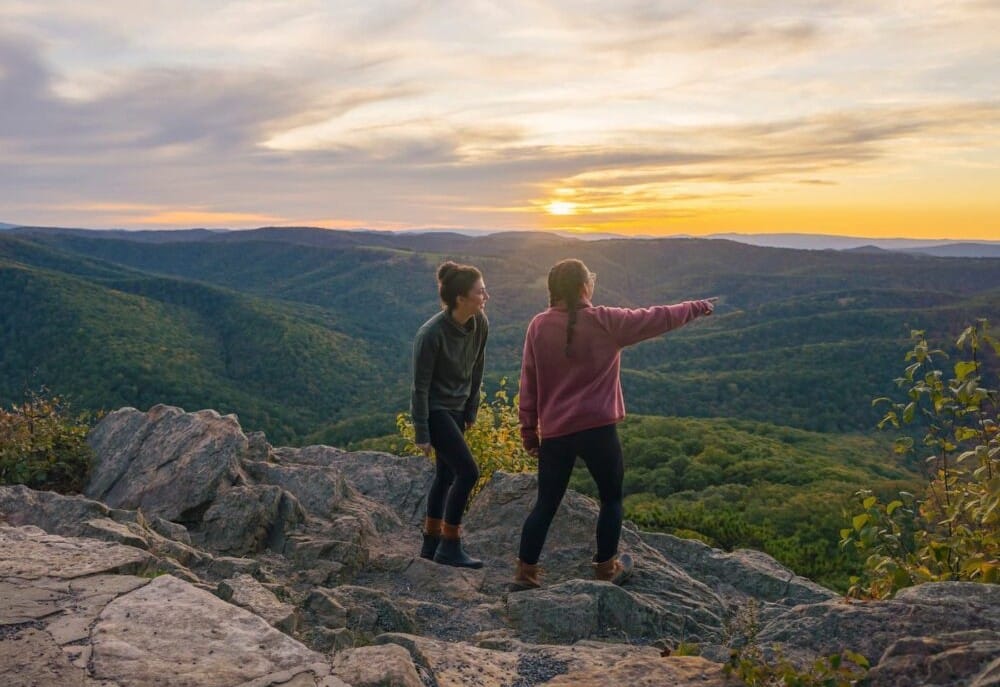
The 5.4-mile Cranny Crow Overlook trail rewards with panoramic views across the folded Appalachian ridges, while shorter loops wind through old-growth stands where birders have spotted 150-plus species. WV-259 itself makes for a scenic drive, threading through narrow valleys where white farmhouses dot the landscape and general stores still outnumber chain restaurants.
The small-town attractions here are artsy and understated. Local craft galleries and co-ops showcase Appalachian pottery, woodwork, and textiles. Low-key cafés serve farm-fresh breakfasts that taste better after a morning hike.
When to Go
Fall festivals arrive in late September and October, bringing apple butter stirring, craft markets, and the kind of community gatherings that feel increasingly rare. None of it is polished for tourists, which is precisely the point.
Where to Stay
Look for cabins in and around Lost River State Park or along the WV-259 corridor, where you’ll get the seclusion the area is known for—think wooded properties, long driveways, and big sky views.
Most rentals here are set up for unplugging (literally), with fire pits, decks, and hot tubs, so prioritize a spot with outdoor space rather than proximity to town—because there really isn’t much of one.
If you’ve been fantasizing about a weekend getaway where the agenda is simply to exist somewhere beautiful and do very little, book a stay in Lost River.
Best Weekend Trips from DC by Season
Fall (September to November). Mid to late October is peak foliage across the region. Harpers Ferry’s ridges and Skyline Drive above Luray put on the biggest show, so arrive early and expect crowds. For color with fewer people, head to Basye and Mount Jackson. Winchester’s orchards are in harvest through September and October, and Lost River’s small-town fall festivals run from late September into October.
Winter (December to February). Bryce Resort in Basye turns into a ski, snowboard and tubing weekend. Berkeley Springs is at its coziest, with warm mineral baths on cold days and a month-long spa celebration in January. Harpers Ferry trades crowds for quiet trails, though some businesses keep reduced hours after Thanksgiving. Check conditions before driving Skyline Drive, which can close during ice or heavy snow.
Spring (March to May). Winchester’s Shenandoah Apple Blossom Festival fills late April and early May. Wildflowers line the trails around Harpers Ferry and Berkeley Springs, and April is shoulder season in Luray, when you might have an overlook to yourself.
Summer (June to August). Head for the water: tubing and rafting on the Shenandoah at Harpers Ferry, swimming and boating on Cacapon Lake near Berkeley Springs, and paddling on Lake Laura at Bryce Resort. Summer is also the quietest season in Basye, ideal for a slow cabin weekend.
Planning Tips for a Stress-Free DC Weekend Road Trip
A little advance planning transforms a quick escape into a genuinely relaxing weekend rather than a logistics scramble. Given that most of these destinations sit within two hours of the Capitol, the details matter more than distance.
Best time of day to leave DC
Leave DC either before 2 p.m. on Friday or wait until after 7 p.m., as the 4 to 7 p.m. rush hour window can add 40 minutes or more to your drive, especially on I-66 westbound. If you’re heading to Berkeley Springs or Lost River, factor in additional time on winding backroads that don’t allow passing.
For peak foliage weekends in October or ski-season trips to Bryce Resort, book restaurant reservations and cabin rentals well ahead; these small towns fill up fast, and showing up without a plan means limited options.
Road conditions
Check road and park conditions before you leave. The National Park Service app provides real-time updates for Shenandoah National Park, including weather cameras for Skyline Drive, which can close during ice storms or heavy snow. If you’re planning river activities in spring, verify water levels: seasonal flooding can postpone tubing trips.
Long weekend timing
Consider a long-weekend format when possible. Leaving Thursday evening or early Friday morning opens up the two-hour destinations like Luray, Lost River, and Basye without the rushed feeling of a standard two-night trip or day trip. You’ll arrive with time to settle in, explore at leisure, and still return Sunday afternoon with energy to spare.
Book Your Next Weekend Trip From DC
Most of these escapes sit just 60 to 120 minutes from the Capitol, meaning you can leave after Friday traffic clears and wake up to mountain views by Saturday morning. Don’t wait for “someday”, especially if you’re eyeing popular seasons like October fall foliage along Skyline Drive or January ski weekends at Bryce Resort. These windows book quickly, and the best cabins go first.
Ready to trade DC sirens and traffic for rushing rivers, starry skies, and weekend mornings with no alarm clock? Find yourself a rental up to two hours from DC and start making your next escape from the city a reality.
Frequently Asked Questions
What is the closest weekend trip from DC?
Harpers Ferry, West Virginia, about 67 miles and roughly an hour’s drive from downtown when you avoid Friday rush hour.
Can you take a weekend trip from DC without a car?
Yes. The MARC Brunswick Line runs from Union Station to Harpers Ferry, putting a mountain river town within reach by train.
What is the best weekend trip from DC in the fall?
For peak foliage, Harpers Ferry or Luray and Skyline Drive in mid to late October. For apple picking and cider donuts, Winchester. For foliage without the crowds, Basye and Mount Jackson.
What is a good winter weekend getaway from DC?
Berkeley Springs for mineral baths and spa days, or Basye for skiing at Bryce Resort.
When should I leave DC for a weekend trip?
Before 2 p.m. or after 7 p.m. on Friday. The 4 to 7 p.m. window can add 40 minutes or more on I-66 westbound.
Hero picture by West Virginia Tourism.